


Visual Weight: Why Balance Is Felt, Not Measured
Some rooms feel instantly balanced. Others feel slightly off, even when everything appears correct. The difference often lies not in measurement, but in perception. While design rules can guide proportion and placement, they cannot fully account for how a space feels. Visual weight in interior design — the way elements carry presence within a room — operates on a more intuitive level.
Rather than relying solely on symmetry or scale, designers respond to balance through observation. They adjust, shift, and refine until the room feels settled. In this way, visual weight in interior design becomes something experienced rather than calculated.
What Is Visual Weight
Every object carries visual weight. Dark tones feel heavier than light ones. Large forms command attention more than smaller details. Texture, contrast, and placement all influence how much presence an element holds.
However, visual weight in interior design does not stay fixed. A small object can feel powerful when placed with intention. Likewise, a light-toned piece can stand out when it contrasts with its surroundings. Because of this, balance depends on relationships between elements rather than size alone.
Balance Beyond Symmetry
Symmetry offers a clear path to balance, but it rarely creates the most interesting spaces. Instead, many designers rely on asymmetry to distribute visual weight in interior design more naturally. By placing elements unevenly yet intentionally, they create rooms that feel dynamic and composed.
For example, a large artwork on one wall can balance a grouping of smaller objects across the room. The layout doesn’t mirror itself, yet it still feels complete. As a result, the space avoids rigidity while maintaining cohesion.
The Role of Art in Visual Weight
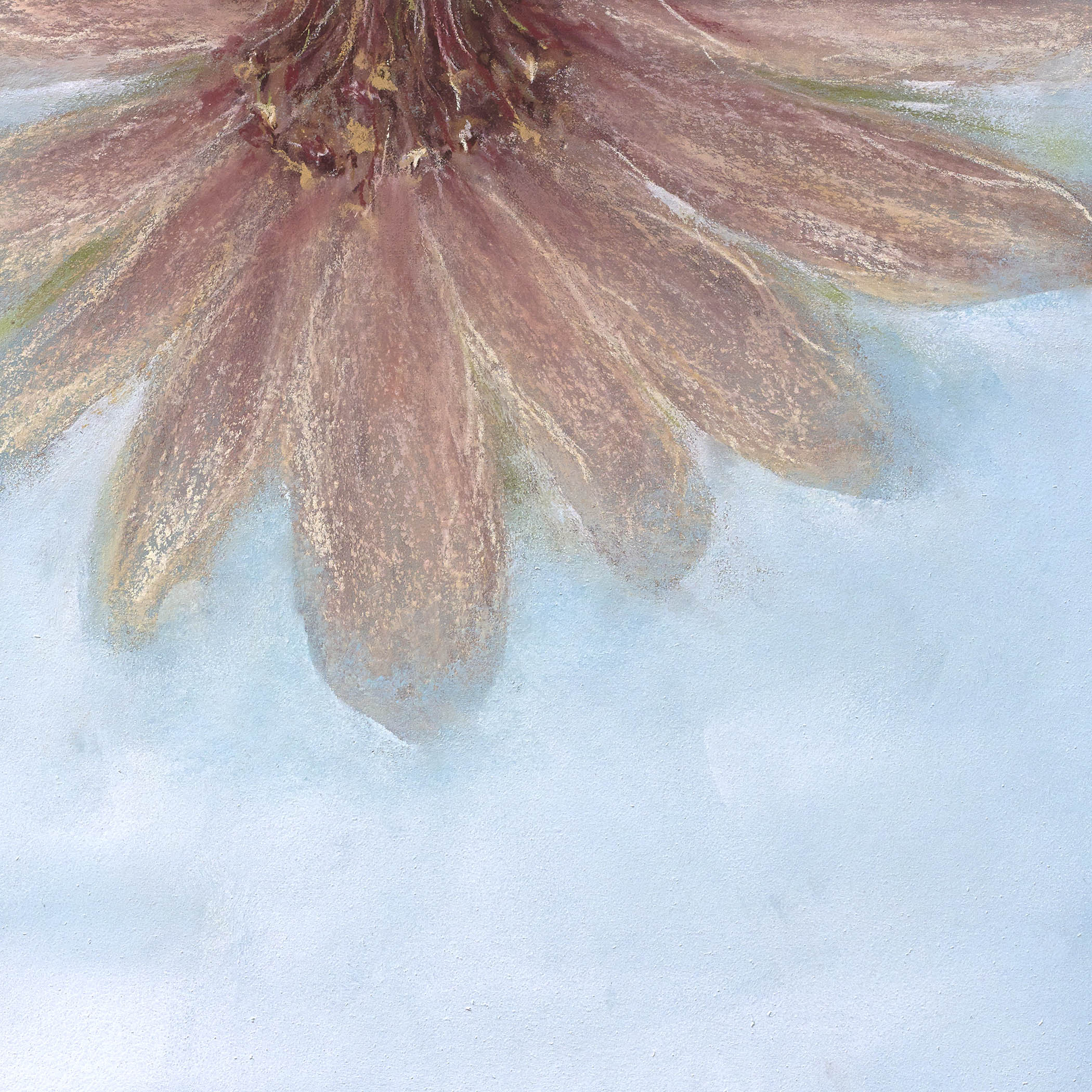
Art anchors visual weight in interior design more effectively than almost any other element. It draws the eye, defines a focal point, and shapes how the rest of the room comes together.
Because of this, designers often build around artwork. A single piece can shift the balance of an entire space. When placed thoughtfully, art corrects imbalance, reduces the need for excess objects, and strengthens the overall composition.
Reading the Room
Designers don’t calculate visual weight in interior design — they read it. They step back, observe how the eye moves, and identify where the space feels too heavy or too empty. Then, they make adjustments.
They might move artwork, reposition objects, or remove unnecessary elements. Even small changes can shift the entire balance of a room. Over time, this process creates a composition that feels natural and resolved.
Signs a Space Feels Balanced
When visual weight in interior design is distributed effectively, the room begins to settle:
- The eye moves naturally without getting stuck in one area
- No single element overwhelms the space
- Focal points feel clear but not forced
- The room feels cohesive rather than fragmented
- There is a sense of calm, even with contrast present
These signals suggest that balance has been achieved intuitively.
For more inspiration, follow Bad Dog Editions on Instagram.
Share:
Soft Edges: Where Form Becomes Atmosphere
Earth Tones: Grounded Color in Contemporary Art