


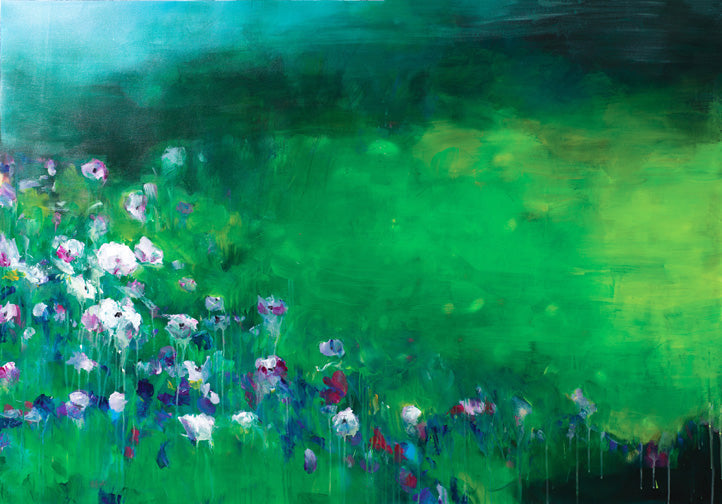
Verdant Visions
Green has always been more than a color, it’s a mood, a symbol, and a grounding force. In art, green evokes renewal, vitality, and balance, bridging the natural world with contemporary design. As we dive in, Verdant Visions will explore how artworks infused with green bring life to interiors, shifting spaces from static to organic, from composed to alive.
Lush & Layered Greens
Deep forest tones and layered surfaces create a rich sense of richness and abundance. Additionally, these works add depth to interiors, creating a space with calm intensity. They invite stillness while carrying the quiet power of nature’s endurance.
Minimalist Greens
Meanwhile, soft sage, olive, and moss hues make interiors of restraint and harmony. Minimalist greens compliment the earth's natural textures like stone, wood, and linen. They offer balance without overwhelming the space. Furthermore, these works remind us that green does not need to be loud in order to be transformative.
Abstract Botanicals
To continue, when green is paired with an organic form, it becomes more than a color, it becomes a gesture. Abstract leaves, swirls, or blossoms appear as whispers of nature, not literal depictions. These works blend structure with softness, making them versatile, they can be put in both contemporary and traditional interiors.
Architectural Greens
In urban inspired pieces, green acts as counterbalance to steel, concrete, and glass. For example, geometric forms can be softened by green tones to transform skylines into living structures, suggesting harmony between the built and natural world.
Themes Explored
- The emotional and symbolic role of green in contemporary art
- Lush and layered greens as depth and abundance
- Minimalist greens creating balance and calm in interiors
- Abstract botanical forms connecting art and nature
Green in Contemporary Art
To conclude, green is endlessly adaptable — grounding, energizing, calming, and alive. In these Verdant Visions, art captures the essence of growth and balance, proving that even in the most structured interiors, a touch of green creates connection.


Share:
The Designer’s Eye: Why Art Belongs Early in the Process
Atmosphere in Color: The Power of Palette in Art and Design